Post-Surgical Rehabilitation: What Sayreville Patients Need to Know

Medically reviewed by Devanshi Modi, PT, Cert. MDT, CMP — licensed physical therapist with over 15 years of clinical experience.
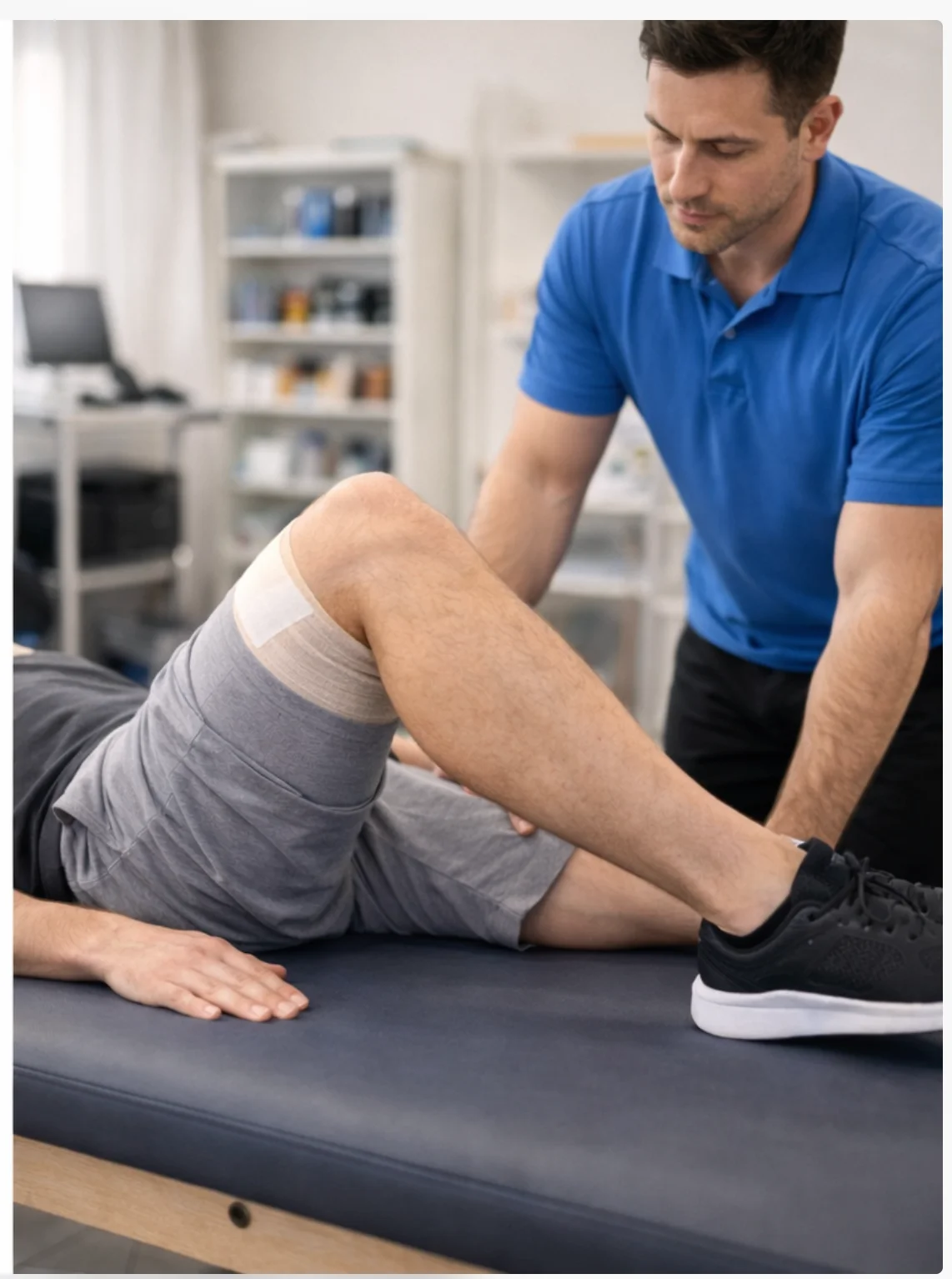
If you're a Sayreville resident facing surgery or recovering from a recent procedure, you might be wondering about your physical therapy options. Physical therapy is a standard part of recovery after many operations; after knee replacement, for example, the American Physical Therapy Association's clinical practice guideline recommends that a physical therapist supervise your rehab.[1] Knowing what to expect can help you plan ahead and choose a therapist you feel comfortable working with.
How Physical Therapy Can Help After Surgery
Surgery is just the first step in your recovery. Physical therapy after surgery can help you:
- Regain range of motion lost after surgery and immobilization; range-of-motion exercises are a guideline recommendation after knee replacement[1]
- Rebuild strength in muscles that have weakened; after knee replacement, the APTA guideline strongly recommends progressive strength training to improve function, strength and motion[1]
- Limit stiffness: after rotator cuff repair, for example, starting exercise early (when your surgeon allows) has been linked to a lower risk of a stiff shoulder[2]
- Work back toward your normal activities step by step: after knee replacement, the APTA guideline recommends gradually increasing physical activity based on how you're tolerating it,[1] and after ACL reconstruction, a Dutch physical therapy guideline recommends strength and hop tests to help judge when you're ready to return to sport[3]
Common Surgeries We Rehabilitate
Orthopedic Procedures
- Total knee replacement
- Total hip replacement
- ACL reconstruction
- Rotator cuff repair
- Shoulder labrum (SLAP) repair
- Meniscus surgery
- Ankle surgery
Spine Procedures
- Lumbar discectomy
- Spinal fusion
- Laminectomy
- Cervical disc surgery
What Sayreville Patients Should Know
Timing of Therapy
When therapy starts depends on the operation and on your surgeon's protocol. After knee replacement, the APTA guideline recommends starting physical therapy, including getting up and moving, within 24 hours of surgery, usually while you're still in the hospital.[1] In trials of hip and knee replacement, getting patients out of bed sooner (within the first day in most of the trials) shortened hospital stays by about 1.8 days, without more complications.[4] After rotator cuff repair, the best timing is still being studied: in a review of 11 trials, early exercise improved shoulder motion compared with keeping the arm in a brace, though pain and function scores were similar.[2] After lumbar disc surgery, most rehab programs tested in trials started 4 to 6 weeks after the operation, and programs started immediately afterward did not work better than comparison programs that also included exercise.[5]
Surgeon Communication
We work closely with your surgeon to ensure your rehabilitation follows their protocols and progresses appropriately.
Commitment Required
Post-surgical rehab usually involves:
- Regular therapy visits. In our clinic, post-surgical patients often start with 2 to 3 visits a week; the right schedule depends on your surgery, your surgeon's protocol and your progress.
- Consistent home exercise. The exercises you do between visits are a core part of rehab: after lumbar disc surgery, small trials found no clear difference in pain or disability between home and supervised exercise programs,[5] and after knee replacement, a review of small trials found no clear difference in function or pain between home-based and outpatient physiotherapy exercise,[6] although the APTA guideline notes that in more recent studies, standard outpatient rehab was linked to better function at 3 months than home-based rehab.[1]
- Patience as tissues heal and strengthen: after ACL reconstruction, for example, a Dutch evidence-based guideline recommends that rehab continue for 9 to 12 months.[3]
The Spineck PT Difference for Post-Surgical Patients
At Spineck Physical Therapy, just 12 minutes from Sayreville, our post-surgical rehabilitation is built around:
One-on-One Sessions
Every session is one-on-one with your physical therapist, so your therapist isn't splitting time with other patients. The APTA knee replacement guideline lists both group and individual sessions as reasonable options and recommends that a physical therapist supervise your rehab;[1] one-on-one sessions are simply how we provide that supervision.
Experienced Care
Our therapist has extensive experience with post-operative shoulder and knee patients, including:
- SLAP repairs
- Rotator cuff reconstructions
- ACL reconstructions
- Total joint replacements
- Spine surgeries
Personalized Progression
Rather than one fixed program for everyone, your rehabilitation is tailored to:
- Your specific surgery
- Your surgeon's guidelines
- Your individual healing rate
- Your functional goals
This is in line with guideline advice for ACL reconstruction, for example, which recommends using strength, hop, movement-quality and psychological tests to guide progression from one rehab phase to the next.[3]
Getting to Spineck PT from Sayreville
The drive from Sayreville to our East Brunswick clinic takes about 12 minutes:
- Take Route 9 South toward Route 18
- Merge onto Route 18 North
- Continue approximately 4 miles
- We're at 646 NJ-18 North, Suite 110 (Building B)
Free parking is available directly in front of our building.
What to Bring to Your First Post-Surgical Visit
- Surgical report or operative notes (if available)
- Any precautions or protocols from your surgeon
- List of current medications
- Comfortable, loose-fitting clothing
- Your insurance card
Questions to Ask Before Surgery
If you're planning surgery, consider asking your surgeon:
- When should I start physical therapy?
- Are there specific protocols you want followed?
- What are the restrictions after surgery?
- How long is the typical recovery?
Start Your Recovery Right
For some operations, the clearest research benefits of rehab show up in the first few months: after lumbar disc surgery and after knee replacement, exercise programs improved function in the short term in small, mostly lower-quality trials, although trials have not shown clear long-term differences.[5][6] That makes the first few months after surgery worth planning for: talk with your surgeon about when to start, and line up your therapy before you need it.
Sayreville residents preparing for or recovering from surgery: Call 551-208-3234 to schedule your post-surgical rehabilitation at Spineck Physical Therapy.
References
- Bove AM, Carroll LA, Cone S, et al. Clinical practice guideline for physical therapist management of total knee arthroplasty: revision 2026. Phys Ther. 2026;106(7):pzag058. doi:10.1093/ptj/pzag058 · PubMed
- Hao B, Li H, Liang A. Effects of early exercise and immobilization after arthroscopic rotator cuff repair surgery: a systematic review and meta-analysis of randomized controlled trials. BMC Musculoskelet Disord. 2025;26(1):254. doi:10.1186/s12891-025-08500-7 · PubMed
- van Melick N, van Cingel RE, Brooijmans F, et al. Evidence-based clinical practice update: practice guidelines for anterior cruciate ligament rehabilitation based on a systematic review and multidisciplinary consensus. Br J Sports Med. 2016;50(24):1506-1515. doi:10.1136/bjsports-2015-095898 · PubMed
- Guerra ML, Singh PJ, Taylor NF. Early mobilization of patients who have had a hip or knee joint replacement reduces length of stay in hospital: a systematic review. Clin Rehabil. 2015;29(9):844-854. doi:10.1177/0269215514558641 · PubMed
- Oosterhuis T, Costa LO, Maher CG, et al. Rehabilitation after lumbar disc surgery. Cochrane Database Syst Rev. 2014;2014(3):CD003007. doi:10.1002/14651858.CD003007.pub3 · PubMed
- Artz N, Elvers KT, Lowe CM, et al. Effectiveness of physiotherapy exercise following total knee replacement: systematic review and meta-analysis. BMC Musculoskelet Disord. 2015;16:15. doi:10.1186/s12891-015-0469-6 · PubMed
This article is for general education and is not a substitute for an individual evaluation by a licensed clinician.
Need Help With Your Condition?
If you're experiencing pain or have questions about physical therapy, schedule an appointment with our Certified McKenzie Therapist.
This article is for educational purposes only and is not a substitute for professional medical advice, diagnosis, or treatment. Always consult a licensed healthcare provider about your specific condition.